Mr. Powell raised an eyebrow. "I'm a librarian," he said. "I always know what I'm talking about.What librarian didn't love that line from Gary Schmidt's, Okay for Now (Clarion 2011)? Librarians are accustomed to playing bit parts or major roles in children's fiction. Sometimes, a wonderful librarian is featured in book based on a true story, like Penguin Group's, Ron's Big Mission (2009), by Corinne Naden and Rose Blue. In it, a young African American boy, Ron McNair, challenges his public library's policy of refusing to issue lending cards to African Americans. The librarian realizes that the policy is wrong and untenable, and she issues him a library card. That boy grows up to become a future NASA astronaut. An inspiring story for young boys, aspiring astronauts, African Americans, and librarians.
In library school, we study our profession's Code of Ethics. As a group, we like to think of ourselves as champions of the right of all people to have access to information. That is why we are not surprised to find ourselves featured positively in books.
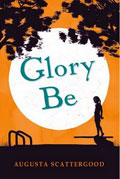
That is why I find the variety of librarian appearances in Glory Be (Scholastic), The Mighty Miss Malone (Lamb/Random), and The Lions of Little Rock (Penguin) so striking.

One book features a librarian willing to take a stand against 1960s segregationists in Mississippi, ensuring that the library will remain open and available to all residents. In another, the local librarian delivers a purposeful or perhaps unwitting insult, describing boxer, Joe Louis, as a credit to his race and inferring that the well-read and intelligent protagonist of the story is also somehow an anomaly among her race. And finally, one book describes a librarian that simply refuses to acknowledge the African Americans seeking service in her library. Of course, we knew it all along; librarians, like the professionals in any other field, are individuals, encompassing the entire range of human dispositions - good, bad, and everything in between.
Thanks to Augusta Scattergood, Christopher Paul Curtis and Kristin Levine for pointing out the opportunity for professional librarians to shape history. That our predecessors did not always influence history in a positive manner should be a wake up call for all of us. May we all appear positively in the historical fiction books of the future.
Excerpts from the Code of Ethics of the American Library Association:
I. We provide the highest level of service to all library users through appropriate and usefully organized resources; equitable service policies; equitable access; and accurate, unbiased, and courteous responses to all requests.
VII. We distinguish between our personal convictions and professional duties and do not allow our personal beliefs to interfere with fair representation of the aims of our institutions or the provision of access to their information resources.
Adopted at the 1939 Midwinter Meeting by the ALA Council; amended June 30, 1981; June 28, 1995; and January 22, 2008.
Clip art licensed from the Clip Art Gallery on DiscoverySchool.com